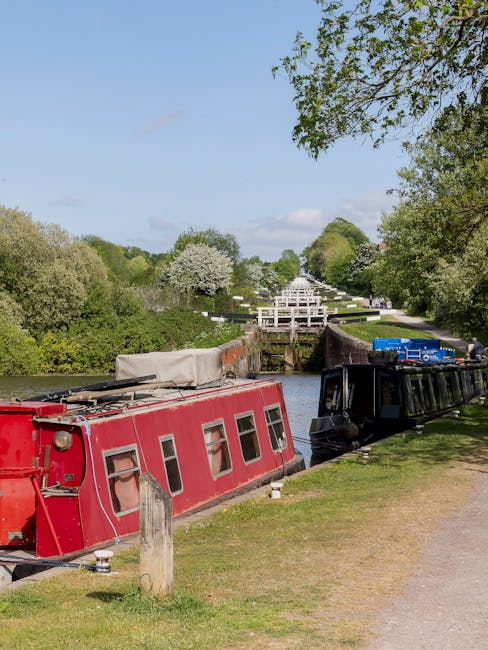
Best Routes for Wide Loads at Hatton Locks
If you are trying to move a bulky sofa, a large wardrobe, or a specialist item through Hatton Locks, route choice matters more than people expect. The Best Routes for Wide Loads at Hatton Locks are not simply the shortest roads on a map; they are the routes that give you enough clearance, avoid awkward turns, reduce stress, and keep the move safe from start to finish. A good plan saves time, protects property, and stops a long day from turning into a very long one.
To be fair, wide-load moves can be deceptively tricky. A road may look fine on paper, but a tight bend, parked cars, low branches, or a narrow gateway can throw everything off. This guide breaks the process down in plain English, so you can understand which routes tend to work best, how to assess them properly, and when it makes sense to bring in help from a local removal team. If you are also planning the packing, lifting, or storage side of the move, you may find our guides on packing for a house move and furniture removals in Hatton useful alongside this article.
Table of Contents
- Why Best Routes for Wide Loads at Hatton Locks Matters
- How Best Routes for Wide Loads at Hatton Locks Works
- Key Benefits and Practical Advantages
- Who This Is For and When It Makes Sense
- Step-by-Step Guidance
- Expert Tips for Better Results
- Common Mistakes to Avoid
- Tools, Resources and Recommendations
- Law, Compliance, Standards, or Best Practice
- Options, Methods, or Comparison Table
- Case Study or Real-World Example
- Practical Checklist
- Conclusion
- Frequently Asked Questions
Why Best Routes for Wide Loads at Hatton Locks Matters
Wide loads need more than confidence and a van. Around Hatton Locks, the route can decide whether a move is smooth or stressful. Narrow access points, bends with poor visibility, canal-side traffic, shared residential roads, and tight parking all increase the chance of delays. If your load is unusually wide, the wrong route can create avoidable risks before the vehicle even reaches the property.
The right route matters for three reasons. First, it protects the item itself. Large furniture, specialist equipment, pianos, and awkward household items can shift, scrape, or tip if the approach is rushed. Second, it protects the property. A wide item can damage walls, gates, ceiling edges, stair rails, and door frames in a second. Third, it protects everyone involved, because moving a bulky load through a restricted space is genuinely tiring work. Anyone who has tried to angle a sofa through a stairwell at the last minute will know the feeling. It is not fun. Not even close.
Good routing is part of good moving practice. It sits alongside careful packing, sensible lifting, and proper pre-move preparation. If you are moving through a flat, for example, the layout can change the route entirely, which is why pages like flat removals in Hatton and house removals in Hatton can be helpful when you are deciding what support you actually need.
Key point: the best route for a wide load is the route that is safest, most predictable, and easiest to execute in real conditions, not just on a navigation app.
How Best Routes for Wide Loads at Hatton Locks Works
Route planning for wide loads is a mix of mapping, local knowledge, and common sense. You start by identifying the item or vehicle dimensions, then compare them with likely pinch points along the route. Those pinch points may include narrow roads, low bridges, parked-car corridors, blind corners, tight entrances, and uneven surfaces. Around Hatton Locks, the local road pattern and access layout can matter just as much as distance.
The process usually works like this: you measure the item or vehicle, check the loading and unloading points, review the approach roads, and work out whether there is enough room to turn, reverse, or briefly stop without blocking traffic. In a proper removal plan, the route is not chosen by guesswork. It is chosen by looking at the whole journey. From the driveway to the road. From the road to the destination. That last bit gets missed more often than you'd think.
For really awkward items, the route may also need to account for the unloading sequence. A sofa might fit the road approach but fail at the final entrance. A piano may travel safely in the van but need a more open final approach at the property. That is why specialist services such as piano removals in Hatton exist, and why experienced movers often treat route planning as part of the handling plan rather than a separate task.
What a good wide-load route assessment includes
- Vehicle width, height, and turning requirements
- Item dimensions, weight, and handling points
- Road width and the ability to pass other traffic
- Entry and exit space at both addresses
- Clearance for trees, signs, walls, and overhead obstacles
- Parking restrictions and stopping points
- Time-of-day traffic conditions
- Backup options if the first route is blocked
If you are arranging a broader move rather than one item, it is worth looking at the wider support available through removal services in Hatton and man with a van in Hatton, especially if route complexity and loading time are both part of the job.
Key Benefits and Practical Advantages
The main benefit of choosing the right route is simple: less risk. But there are several practical advantages that go beyond safety. The right route reduces backtracking, lowers the chance of property damage, and makes the move feel controlled instead of chaotic. That calm, organised feeling is worth a lot on moving day.
- Fewer delays: You spend less time correcting mistakes or re-routing at the last minute.
- Lower damage risk: There is less chance of scraping walls, doors, railings, or vehicle panels.
- Less physical strain: A cleaner approach reduces unnecessary lifting, twisting, and repositioning.
- Better teamwork: Everyone knows where the load is going and what to expect.
- Improved confidence: When the route is checked properly, the job feels manageable.
There is also a financial angle. While we are not talking about exact savings here, a well-planned route often prevents avoidable call-backs, extra labour time, and the kind of accidental damage that can make a move more expensive than it needed to be. If you are comparing support options, it can help to review pricing and quotes alongside the route plan, because the cheapest option is not always the best option for a difficult access job.
And there is a quieter benefit too: fewer surprises. A route that has been checked properly tends to remove that horrible mid-move feeling of, "Oh no, this looked easier on the screen."
Who This Is For and When It Makes Sense
Wide-load route planning is useful for anyone moving items that are awkward, oversized, or difficult to manoeuvre. In practical terms, that includes households, landlords, students with bulky belongings, small businesses, and people moving specialist items that just do not behave like normal furniture. Truth be told, if you have to turn the item sideways, lift it over a threshold, or squeeze it past a tight hallway corner, route planning already matters.
Typical situations where it makes sense
- Moving large sofas, wardrobes, or beds into or out of homes with narrow access
- Transporting a piano or other high-value specialist item
- Working with a flat that has awkward communal access
- Handling same-day or short-notice moves where timing is tight
- Moving office furniture that is wide, heavy, or modular
- Shifting items into storage because the access is easier at a different time
If the job includes household clutter, it often helps to clear the space first. A route is only as good as the room available to use it. Our guide to decluttering before a move can make a real difference here. Likewise, if packing is still underway, packing and boxes in Hatton is a sensible place to start.
For students and smaller moves, route planning still matters, just usually in a simpler way. A narrow stairwell or a tight terrace street can turn a quick job into a drawn-out one, so services like student removals in Hatton or man and van in Hatton may be a better fit than trying to improvise.
Step-by-Step Guidance
If you want the route to work properly, follow a methodical process. The good news is that it is not complicated. It just needs attention.
- Measure the load properly. Get the length, width, height, and any awkward protrusions. Handles, feet, mirrors, and packaging can change the true size.
- Check both addresses. Look at the front door, hallway, steps, driveway, kerb space, and turning area. Do not forget the destination, because many moves fail there rather than on the road.
- Map the approach roads. Review roads around Hatton Locks for width, bends, parking pressure, and obvious pinch points. A route can be technically shorter but practically worse.
- Choose a loading method. Decide whether the item will be carried directly, wheeled, lifted with straps, or dismantled first. That choice may change which route is best.
- Plan where the vehicle will stop. You want a place that allows safe loading without blocking access or forcing a risky carry from too far away.
- Identify a backup route. If the first road is blocked, parked up, or unexpectedly tight, have a second option ready.
- Walk the final approach if needed. This is especially useful for furniture or specialist items. The last ten metres often decide the whole move.
- Protect the route inside the property. Use coverings and spotters where necessary. If ceilings are low or awkward, our guide on ceiling safety measures in a move is a useful companion read.
A small but important tip: if you are moving a bed or mattress, the route must account for flexing, turning, and the shape of stair landings. This mattress moving guide covers a few practical tricks that are easy to overlook when you are in a hurry.
And if you feel yourself rushing, pause for a moment. Seriously. One extra minute spent checking a turn can save twenty minutes of awkward manoeuvring later.
Expert Tips for Better Results
Experienced movers tend to focus on small details that make a large difference. These are the bits people forget until they are standing in a doorway with a sofa that now seems two inches wider than it did at home.
Use local timing wisely
Try to avoid peak traffic windows where possible, especially if your route includes roads that get busy with commuters, school runs, or visitor traffic near the locks. Earlier starts often give you more flexibility, fewer parked cars, and a calmer unloading point. The air feels different too, quieter somehow, and that can help when you are trying to think clearly.
Think in turns, not just distance
Wide loads are more affected by corner shape than mileage. A short route with three awkward bends may be worse than a slightly longer road that gives you room to swing wide. This is one of those moving-day truths that sounds obvious only after it has gone wrong.
Strip away avoidable bulk
If an item can be dismantled safely, do it. Removing legs, doors, detachable arms, or shelves can turn a difficult load into a manageable one. That also makes the route easier because you reduce the chance of catching on corners or railings. For a more organised move, our article on packing when relocating your home is worth a look.
Keep the team brief and simple
Wide loads do not like confusion. Agree who leads, who spots, who opens doors, and who checks the vehicle position. A move can fall apart when everyone assumes someone else is watching the blind side. It happens. More than it should.
Use the right support services
Some jobs are simply better handled by a specialist team. If the item is valuable, fragile, or unusually heavy, it is sensible to look at professional support and insurance arrangements in advance. The pages on insurance and safety and removals in Hatton can help you think through that decision.
Common Mistakes to Avoid
Most route problems are preventable. They usually come from assumptions, haste, or trying to save five minutes and losing half an hour. Here are the big ones.
- Assuming the sat nav knows best. Navigation apps are helpful, but they do not know your load width or whether a road has awkward access.
- Ignoring the final stretch. People plan the drive and forget the driveway, the gate, or the hallway.
- Measuring loosely. Guessing item size is a fast way to create trouble.
- Failing to check for temporary obstacles. Parked cars, roadworks, bins, and delivery vehicles can change access instantly.
- Not planning a fallback. If the preferred route fails, you need another option ready.
- Overestimating what one person can handle. Solo lifting gets risky quickly with larger items; our guide on safe solo heavy lifting explains why caution matters.
Another common mistake is packing badly before the move. Loose contents, poor wrapping, and unbalanced boxes can make a load harder to control, especially on bumpy roads or tight turns. If that sounds familiar, have a look at moving home with less packing stress and our practical page on achieving a spotless home before you move out. The route is only one part of the job, after all.
Tools, Resources and Recommendations
You do not need specialist gear for every move, but the right tools make route work far easier. A tape measure sounds boring, but it is one of the most valuable things you can carry on a move. Slightly old-fashioned? Maybe. Still essential? Absolutely.
Helpful tools
- Tape measure for doors, hallways, stairs, and vehicle openings
- Phone maps or route-planning apps for quick checks
- Furniture blankets and wrapping for edge protection
- Straps and gloves for grip and control
- Doorstops to keep routes open while carrying
- Floor protection where needed
Useful support pages and services
If you are comparing support options, start with removal services in Hatton for a broad overview, then narrow it down to the most relevant service. For larger family jobs, house removals may be the better fit. For a lighter or faster move, removal van hire in Hatton or same-day removals could be more practical.
For items you do not need immediately, using storage in Hatton can remove pressure from the route decision altogether. That is especially helpful if the destination has limited access or if the timing is split between properties.
And yes, it helps to work with people who care about the awkward details. The about page at About Us is a good place to understand the team and approach behind the service.
Law, Compliance, Standards, or Best Practice
For wide loads, the safest approach is to follow general UK moving best practice, local access rules, and sensible risk management. The exact legal duties depend on the situation, the vehicle, the road, and the property involved, so it is wise to treat this as a planning issue rather than assume one universal rule covers everything.
In practical terms, that means checking whether the route involves any restrictions, private access, parking limitations, or safety concerns that could affect loading or unloading. If a vehicle must stop in a way that affects traffic or pedestrians, that should be assessed carefully. If an item is particularly heavy or awkward, team lifting, proper PPE, and clear communication become part of the standard of care.
Best practice also includes keeping the customer informed, confirming access details ahead of time, and being honest if a route looks unsuitable. There is no prize for pretending a tight turn is fine when it plainly is not. A careful mover will choose safety over bravado every time.
For peace of mind, it is sensible to review a provider's safety information, such as the health and safety policy, and understand how claims or concerns are handled through the complaints procedure. If you are comparing trust factors, that is just good decision-making, not paranoia.
Options, Methods, or Comparison Table
There is more than one way to approach a wide-load move at Hatton Locks. The right method depends on the item, the access, and how much help you want on the day.
| Method | Best for | Pros | Trade-offs |
|---|---|---|---|
| Self-planned route with a small team | Simple furniture moves with decent access | Flexible, cost-conscious, straightforward | Higher risk if measurements or access checks are incomplete |
| Man and van support | Medium-size loads and local moves | Practical help, quicker loading, less lifting strain | May still need advance planning for narrow access |
| Specialist removal team | Large, heavy, fragile, or high-value items | Better handling, safer route planning, more expertise | Usually the most involved option to arrange |
| Storage first, move later | Moves with awkward timing or access issues | Reduces pressure, adds flexibility | Requires two-stage planning and extra coordination |
If you are unsure which method fits your situation, start with the route itself. That often tells you whether the job is a simple van move or one that really needs a more experienced team. For more context, removal companies in Hatton can give you a sense of what different levels of support look like.
Case Study or Real-World Example
Imagine a typical local move near Hatton Locks: a family is shifting a wide corner sofa from a ground-floor property to a nearby house with a narrow frontage and limited on-street parking. On paper, the journey is short. In practice, the sofa is the problem.
The first instinct might be to drive directly to the house, stop outside, and carry it in. But after checking the access, the team realises the road narrows near the bend, and parked cars could leave too little room to unload safely. So they choose a slightly longer approach road with a clearer stopping point, then carry the sofa from there using two people and a third person spotting the doorway. The final entry still takes patience, because the sofa has to tilt to clear the frame, but the route itself removes the biggest risk.
Nothing dramatic happened. That is the point. No scraped wall. No awkward reversing. No sweaty last-minute panic in the street while a neighbour waits to get past with a shopping trolley. Just a sensible route, a few extra minutes of planning, and a move that felt manageable.
That kind of result is exactly what route planning is for. Quiet success. A bit unglamorous, maybe, but very welcome when you are staring at a large piece of furniture and wondering how it ever seemed smaller in the shop.
Practical Checklist
Use this checklist before moving any wide load around Hatton Locks:
- Measure the item, including handles, feet, and packaging
- Measure doors, stair turns, gate openings, and vehicle access
- Check the route for narrow roads, bends, and parking pressure
- Confirm where the van will stop for loading and unloading
- Remove detachable parts where safe to do so
- Protect floors, walls, and corners inside the property
- Assign roles to each person helping with the move
- Keep a backup route in mind if access is blocked
- Review insurance and safety information before the move
- Allow extra time if the load is heavy, wide, or fragile
If your item will not be used straight away, consider whether short-term storage makes the move easier. Sometimes that is the simplest answer. Not flashy, just practical.
Conclusion
Finding the Best Routes for Wide Loads at Hatton Locks is really about combining local awareness, proper measurements, and realistic handling. The safest route is not always the shortest one, and the best move is rarely the one that relies on luck. When you plan ahead, check access carefully, and choose the right support, even a bulky load becomes much easier to manage.
Whether you are moving a sofa, a wardrobe, a bed, or a specialist item, start with the route and work backwards. That habit alone can save a lot of stress. And if you are still at the stage of comparing options, reviewing your access needs, or deciding whether to use a local team, you are already doing the sensible thing. That counts for a lot on moving day.
Get a free quote today and see how much you can save.
Sometimes the best move is the one that feels calm by the time the van door closes. Just steady, careful, and done properly.
Frequently Asked Questions
What is the best route for wide loads at Hatton Locks?
The best route is the one that gives enough clearance, avoids tight turns, and allows safe stopping at both ends of the move. It is usually chosen by checking access, road width, and the final approach rather than using the shortest map route.
Do I need a specialist mover for a wide item?
Not always, but specialist help makes sense if the item is heavy, fragile, valuable, or awkward to manoeuvre. If the access is tight or the route is uncertain, a more experienced removal team is usually the safer choice.
How do I know if a van will fit near my property?
Measure the driveway, frontage, gate opening, and any turning area before the move. Then compare that with the van size and the space needed to unload safely. If in doubt, ask for a route and access check.
Should I rely on sat nav for wide-load planning?
Sat nav is useful, but it does not know the dimensions of your load or the challenges at the final address. It should be a starting point, not the only source of planning.
What if the route looks fine but the final doorway is too narrow?
That happens more often than people expect. In that case, the item may need partial dismantling, an alternative entry point, or extra handling support. The final doorway is just as important as the road.
Are there timing tips for moving wide loads around Hatton Locks?
Yes. Earlier starts can be easier because roads are often quieter and parking is less crowded. Avoiding busy periods also gives you more room to make careful decisions without feeling rushed.
What items usually need extra route planning?
Large sofas, wardrobes, beds, dining tables, pianos, appliances, and office furniture often need extra planning. Anything that is bulky, heavy, or awkwardly shaped can become a route problem very quickly.
Can storage help if the route is too difficult?
Yes. Temporary storage can simplify the move if access at one end is awkward or if you need to split the process into stages. It is often a sensible workaround rather than a last resort.
How far in advance should I plan the route?
As early as you can, ideally before moving day. Even a quick walk-through and a few measurements can prevent problems. For more complex jobs, planning a few days ahead is better still.
What should I do if there are parked cars on the route?
Choose an alternative approach if possible, or plan a safe stopping point with enough room to unload without blocking traffic. If access looks uncertain, it is worth speaking to the mover in advance rather than hoping it works out.
Is wide-load moving covered by insurance?
Coverage depends on the provider and the circumstances, so it is worth checking the terms before the move. Review the mover's insurance and safety information carefully and ask questions if anything is unclear.
What is the simplest way to make a wide-load move easier?
Measure properly, clear the access route, and remove unnecessary bulk before moving day. That combination solves more problems than people expect, and it keeps the whole job calmer.